A free guide
Four layers of light
A room lit from one source is a room with one mood. Four layers, on four switches — and the part almost everyone skips is the switches.
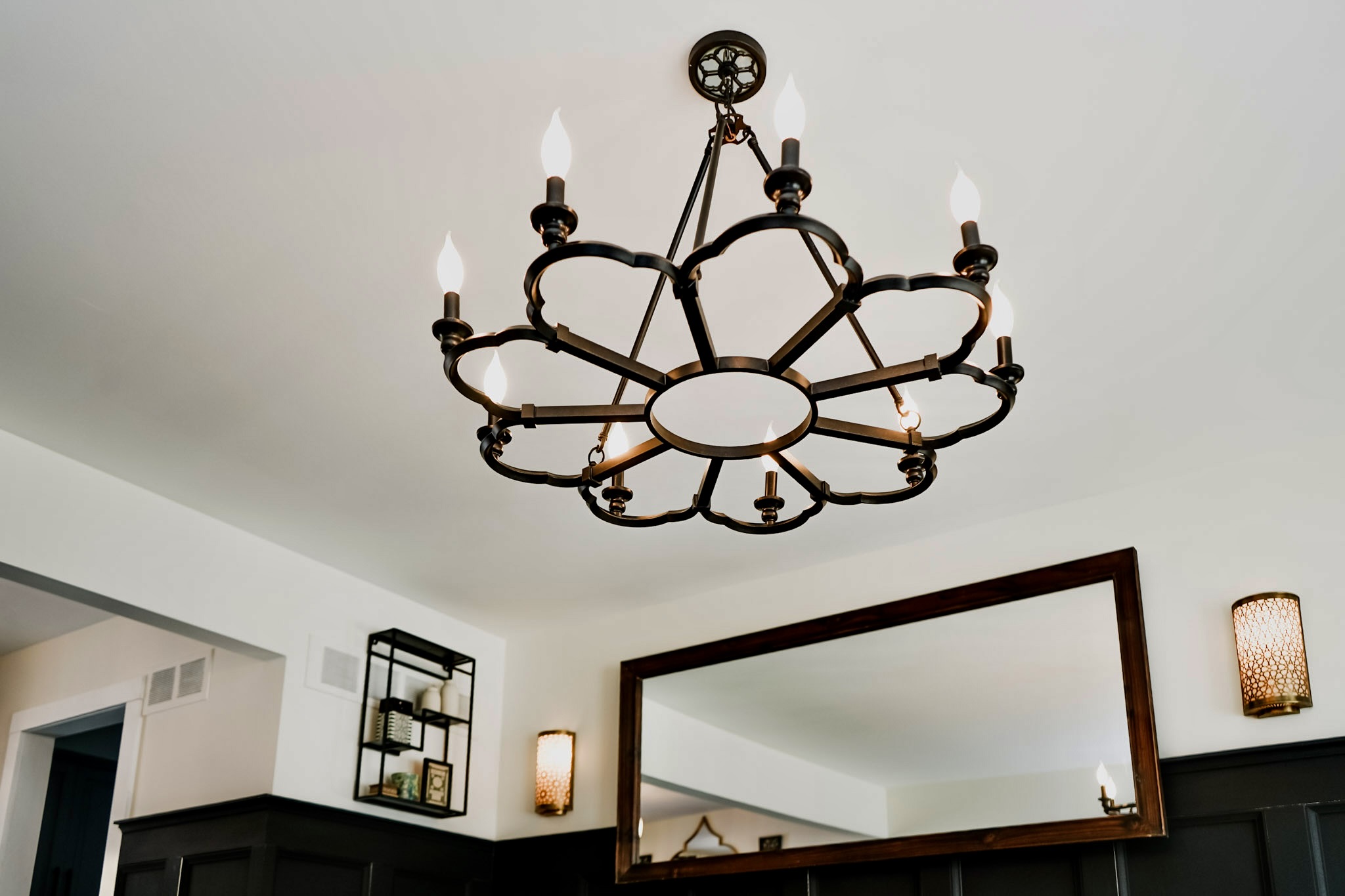
When a room feels flat, the instinct is to add lamps. Usually the problem is not quantity. It is that every light in the room comes on at once, at the same height, at the same brightness, from the same switch — so the room has exactly one setting, and that setting is “on”.
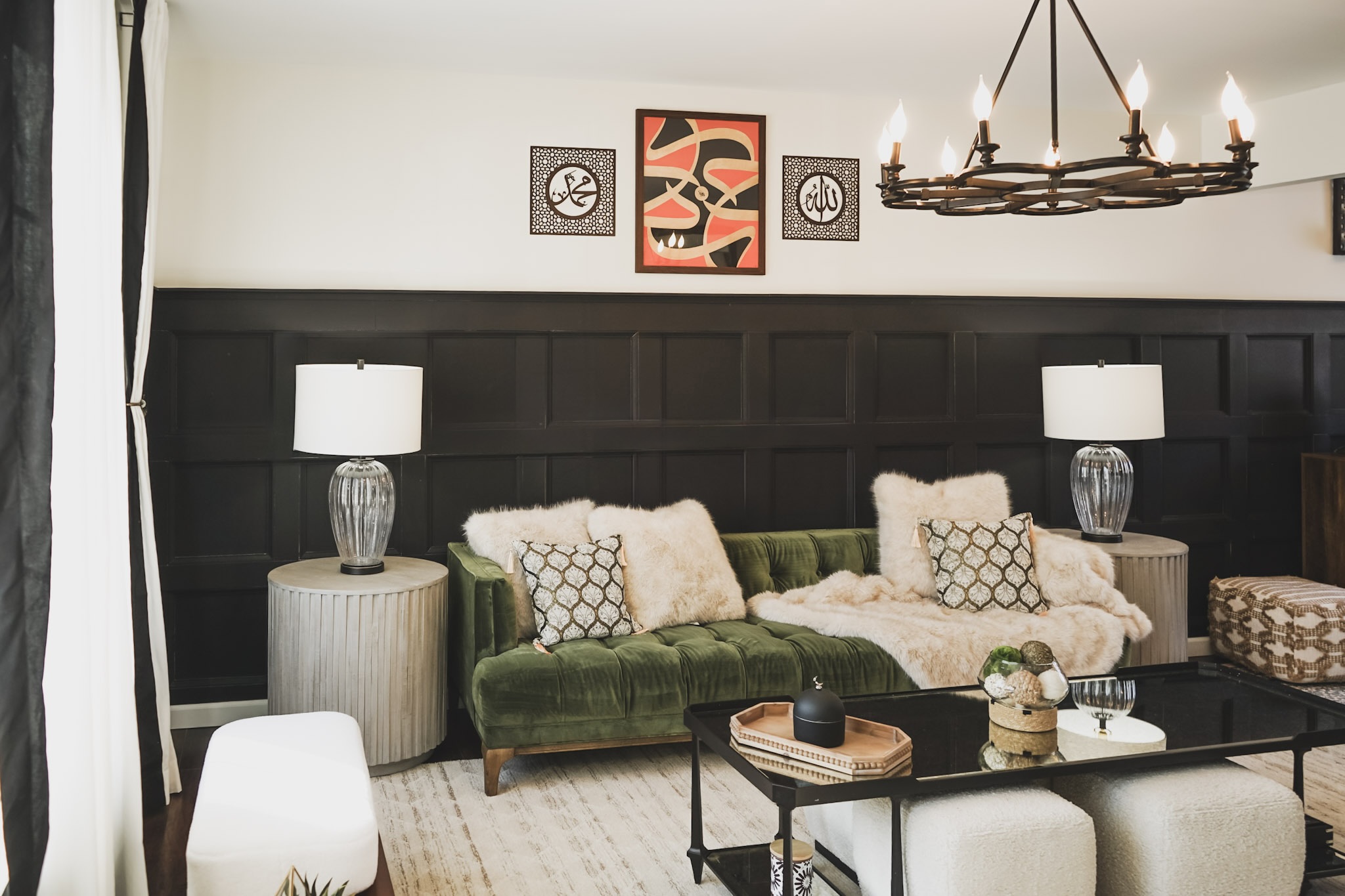
Dark rooms in particular get blamed for something lighting caused. Dark panelling does not shrink a room. Bad lighting does.
1
Overhead — the layer you use least
The ceiling fixture is for cleaning, finding things, and hosting a crowd. It is not for an evening in the room, which is why it should be the first thing on a dimmer.
Hang it so the lowest point sits no less than 7 ft 0 in from the floor over a walkway, and 30–36 in above a table top when it hangs over one. Most chandeliers in rooms like this are hung too high — at which point it stops being a light and becomes a fixture you look up at.
2Wall — the layer that does the work
Sconces are the most underused fixture in a house. They light at the height people actually are, they wash a surface rather than a floor, and they take up no furniture.
Centre them 60–66 in from the floor. Pierced or perforated shades earn their place twice: lit, they throw a pattern onto the plaster, so the fixture is small and the effect is architectural.
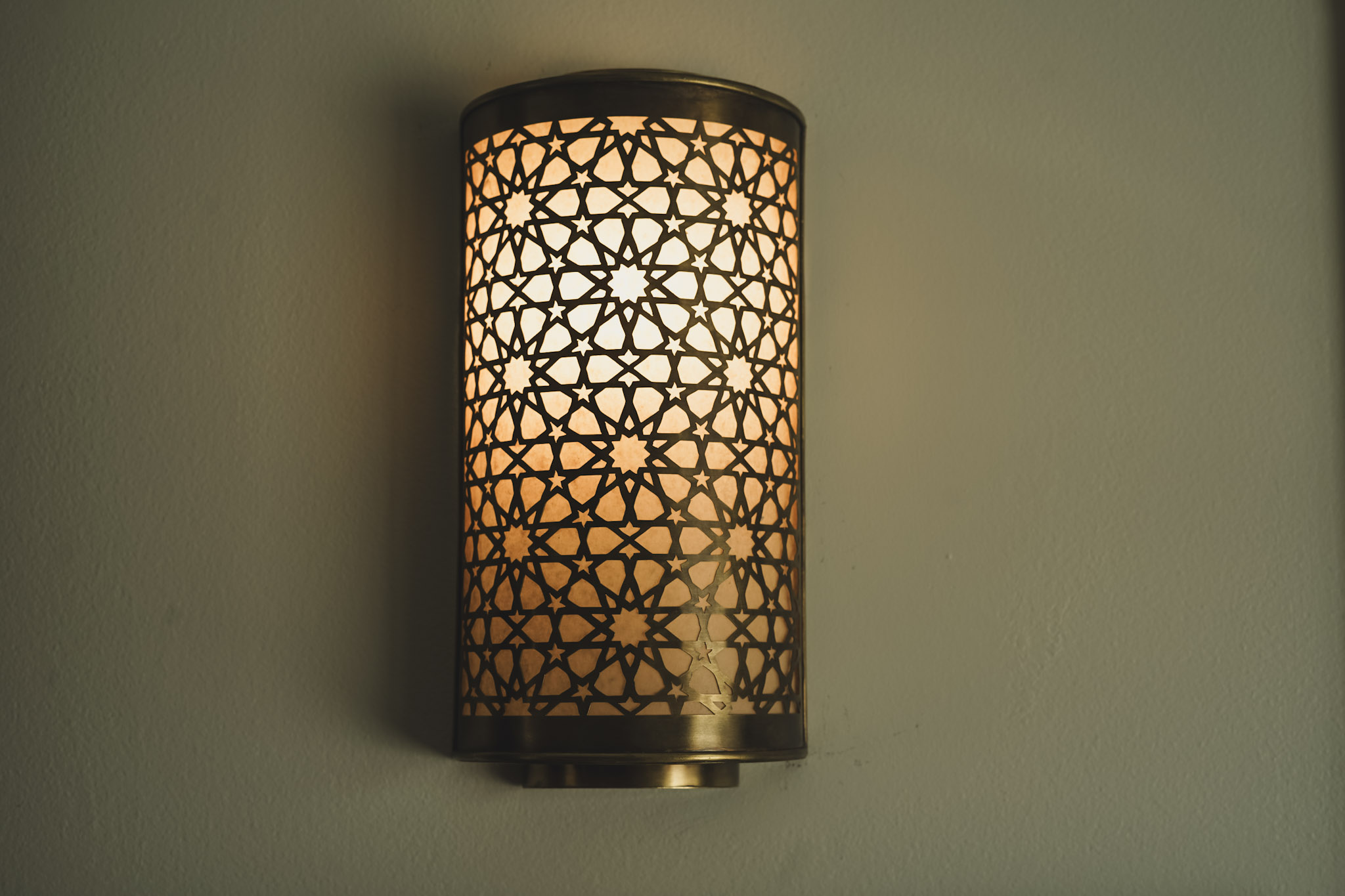
Table — the layer at eye level
Seated eye level is about 42 in from the floor. A table lamp works when its shade bottom sits near that line: any higher and you see the bulb, any lower and the light pools uselessly on the tabletop.
Two lamps at opposite corners of a room do more than four in a cluster. This is the layer to add first if you rent and can change nothing else.

Daylight — the layer you shape, not add
The fourth layer is already there; drapery is how it gets edited. Hang the rod high and wide — 8–12 in of stack-back past the window frame on each side — so the open panels sit against the wall rather than the glass. The window gets bigger and the room gets brighter, and neither costs a fixture.
Two panels per window instead of one. It costs more fabric, and it is the difference between drapery and a curtain.
The four switches
This is the part that gets skipped, and it is the part that makes the layers worth having. Four sources on one switch is still one mood. Four sources on four switches is a room that can be set to the hour.
| Setting | What is on | When |
|---|---|---|
| Working | Overhead at full, wall | Cleaning, cooking, homework |
| Hosting | Overhead at 60%, wall, table | Guests, dinner, a full room |
| Evening | Wall and table only | The setting you will use most |
| Quiet | One table lamp, or one sconce | Prayer, reading, early morning |
If you change one thing: put the overhead on a dimmer and move the sconces to their own switch. That single circuit change buys three of the four settings above.
Bulbs, which matter more than fixtures
- 2700K, everywhere. Mixing colour temperatures across one room is the most common and most visible mistake — 4000K next to 2700K reads as broken, not bright.
- CRI 90 or higher. Colour rendering is what makes wood, brass and paper look like themselves. A cheap bulb makes an expensive finish look grey.
- Check the bulb is dimmable and that the dimmer is rated for LED. A flickering room is almost always a mismatch here, not a fault.
- Aim light at a surface, not into the room. Wall, ceiling, tabletop. Reflected light is soft light.
A one-evening audit
- Turn on every light in the room. Count the sources and count the switches.
- Note any bulb that is a different colour to the others. Replace them all with 2700K.
- Sit down. If you can see a bare bulb or a bright shade from a seated position, that fixture is too high or too low.
- Turn the overhead off. If the room goes dark, you are missing the wall and table layers.
- Measure your drapery stack-back. If the open panels cover glass, move the rod out.
- Choose your four settings and write down what is on in each. Then wire the switches to match.
Want this done for your room?
Lighting plans are part of every project I take on, and they can be done on their own — in Metro Detroit in person, anywhere else virtually. Send me the room and I will tell you what it needs.
Start your project inquiry Or use the form on illumedesignmi.com